A harvest market offers almost too much to save: handwritten signs, paper bags, crates of color, herb scents, and small conversations passing between stalls. The best journal page does not try to hold all of it. It chooses one path through the morning.
Bring a small envelope and a pencil. Collect only paper that is offered to you or meant to be discarded, and ask before photographing a person or private stall display. The goal is to notice the place, not dismantle it.
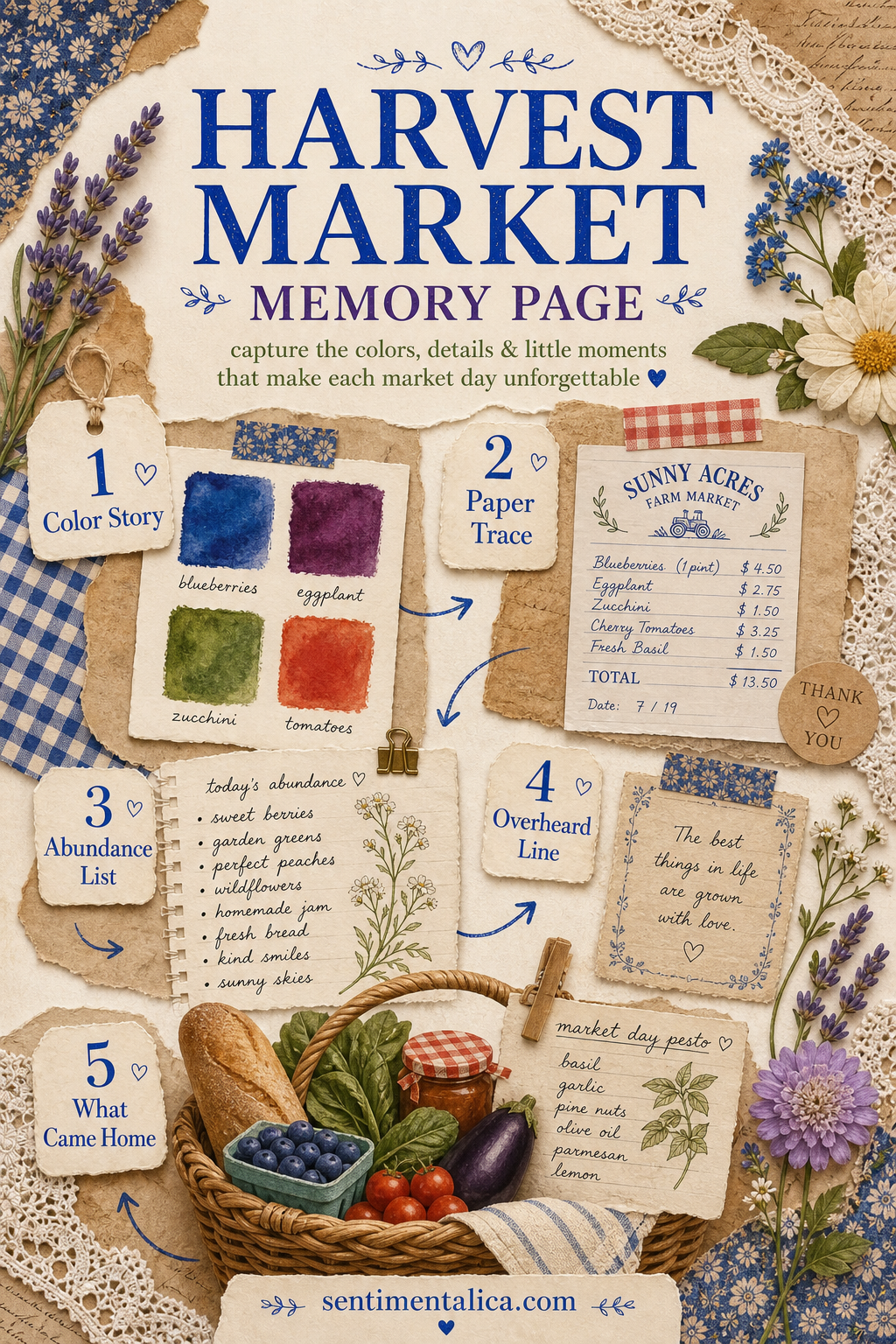
Choose one market color story
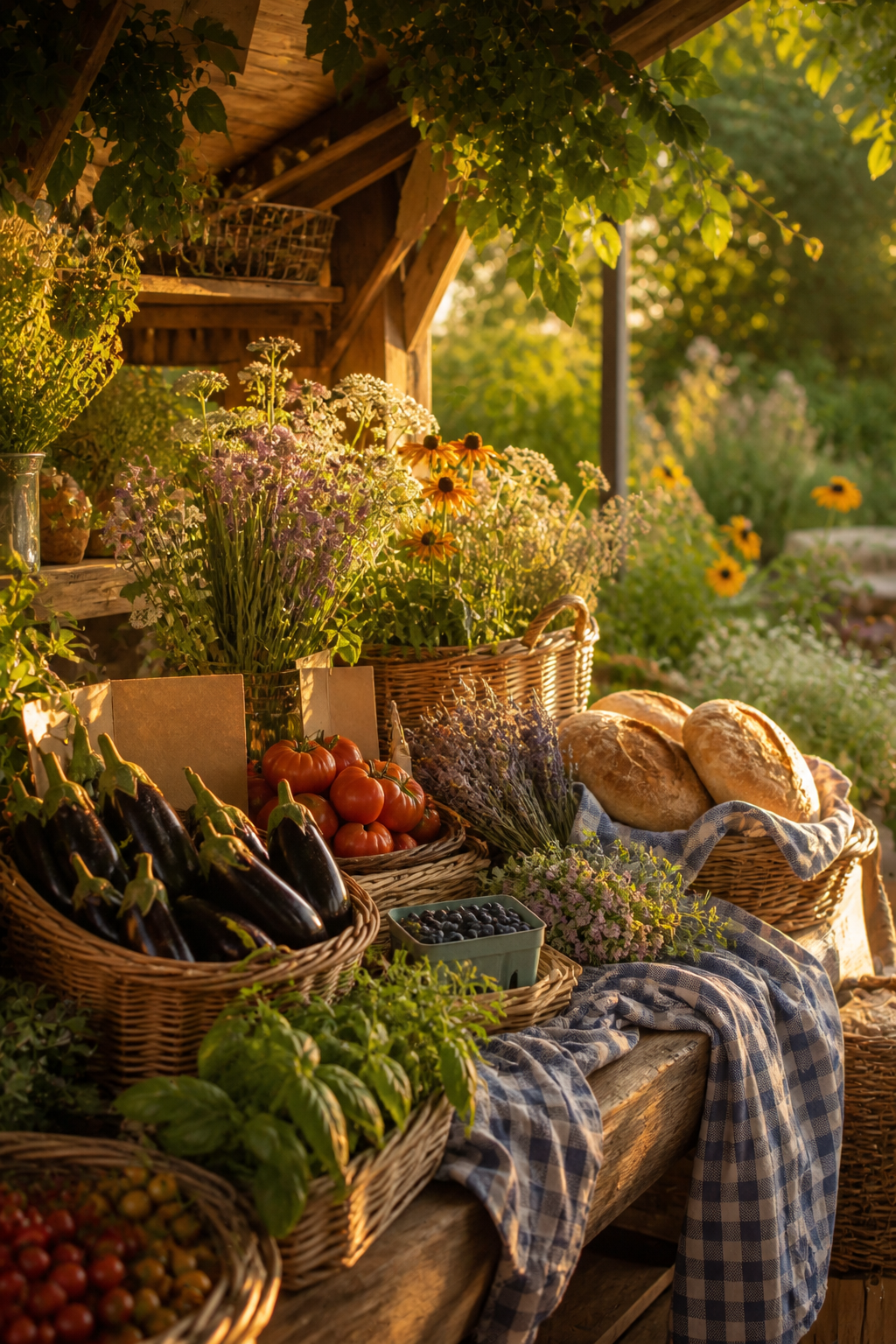
Before collecting anything, look for the four colors that define the morning. You might find aubergine, leaf green, oat cream, and tomato red. Another market may give you pumpkin, galvanized gray, faded blue, and dark soil.
Take one photograph that contains most of those colors. Later it can become the visual anchor for the spread. You do not need every beautiful stall if one image holds the feeling clearly.
Save one useful paper trace
A produce label, clean paper-bag fragment, receipt, business card, or shopping-list corner can carry the typography of the market. Choose one piece and keep its most recognizable detail visible.
If the paper is too large, tear around a word, stamp, or illustrated border. Photograph thermal receipts because their printing may fade. Write the market name and date on the back before different outings become mixed together.
Write down what was abundant
Make a quick list of what appeared everywhere: baskets of apples, squash, late tomatoes, dahlias, mushrooms, bread, jars, or herbs. This is not an inventory. Five or six words are enough to locate the day in its season.
Arrange the list like a market sign, seed catalogue, or handwritten order sheet. Keep your natural spelling and pace. A hurried note can feel more alive than carefully typeset text.
Keep one line of conversation
Record a sentence you heard or exchanged: advice about choosing pears, a comment about the weather, or the name of an unfamiliar variety. Avoid private details. You are saving the social texture of the morning, not turning strangers into subjects.
Write the line on a small tag and tuck it behind the photograph. When it is pulled out, the page gains a voice.
Build the spread like a market stall
Markets often arrange abundance inside clear containers: baskets, crates, rows, and stacks. Borrow that logic. Give each part of the page a loose boundary, then allow one object to cross an edge.
Add a small map of the morning
Draw the route between three stalls or mark the sequence of what you chose. The map can be as simple as three boxes and a curved line. Add one sensory word beside each stop: peppery, damp, warm, papery, sweet.
This turns a decorative harvest page into a record of movement. Even a familiar weekly market will look different when you notice how you travelled through it.
Finish with what came home
Photograph the produce on your kitchen table or write what you made with it. A soup stain, recipe note, or label from a jar can be added later as a second chapter. The page then connects field, market, and home without needing a literal farm scene.
A market memory lives in the exchange: something grown, something chosen, and something carried home.
If you visit again, repeat the same structure in another season. Over time, the changing colors, lists, and prices will create a quiet record of the land around you.
For more journals built from ordinary places and paper traces, browse the Sentimentalica journal.