Dark Halloween pages often fail for a simple reason: every layer is trying to create the mood at once. Black paper, dense pattern, heavy ink, lace, wax seals, and large images can merge into one solid block. The solution is not to remove the darkness, but to give it contrast, scale, and a clear job.
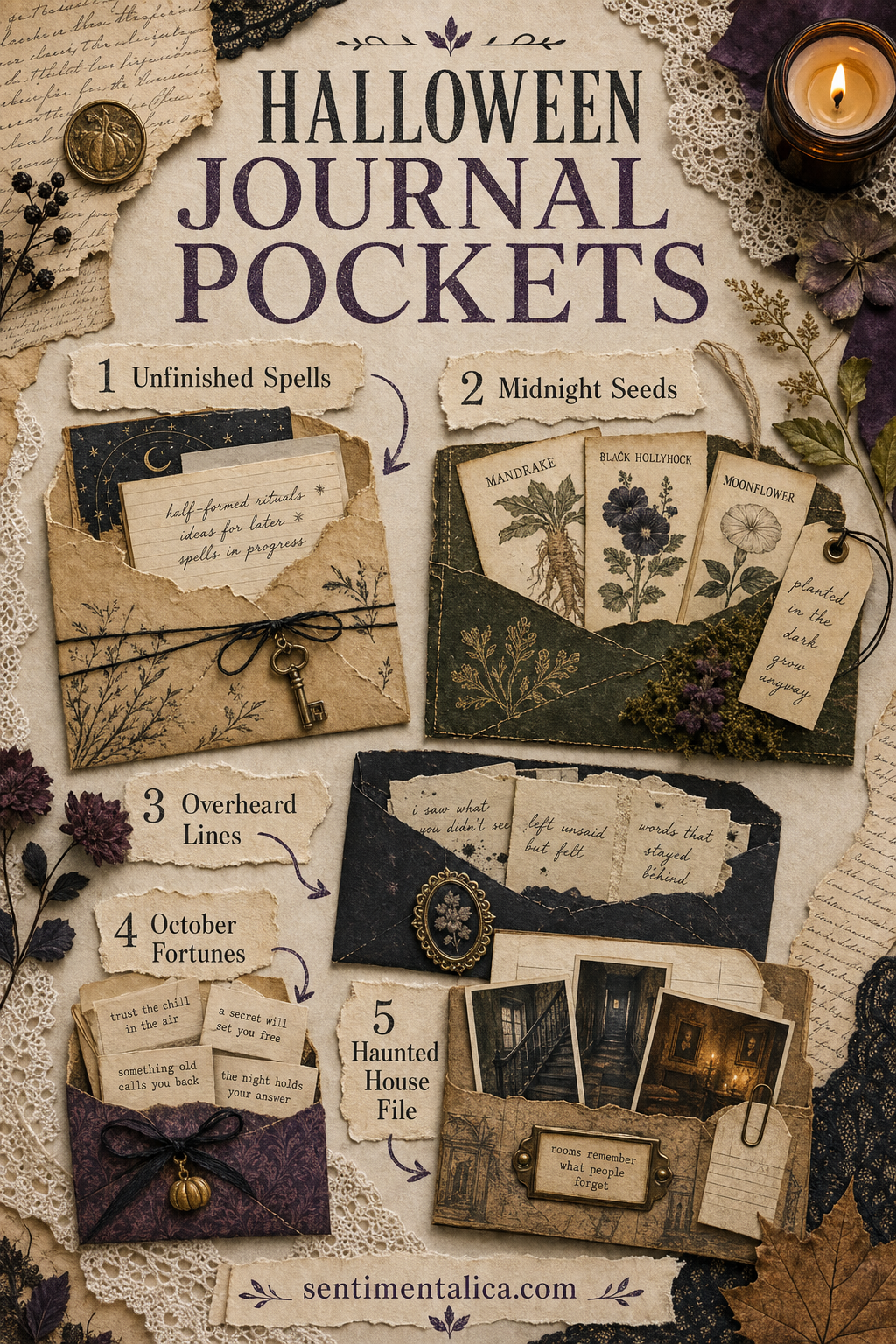
Keep one light path through the page
Before gluing, place a strip of cream, faded grey, or translucent vellum beneath the darkest elements. Let it travel from one side of the spread to the other. This light path can hold the date, journaling, or a sequence of tiny labels. It prevents the composition from feeling sealed shut.
Use black as punctuation
Black is most effective in distinct marks: a border, thread, stamped word, silhouette, or three small shapes. When the whole foundation is black, introduce larger areas of parchment and muted colour above it. Think of darkness as punctuation around the story, not the story itself.
Change the scale of repeated motifs
If you repeat moons, moths, leaves, keys, or frames, vary their size. Use one large motif, one medium supporting version, and one tiny echo. Equal-sized embellishments create visual noise because they all ask for the same amount of attention.
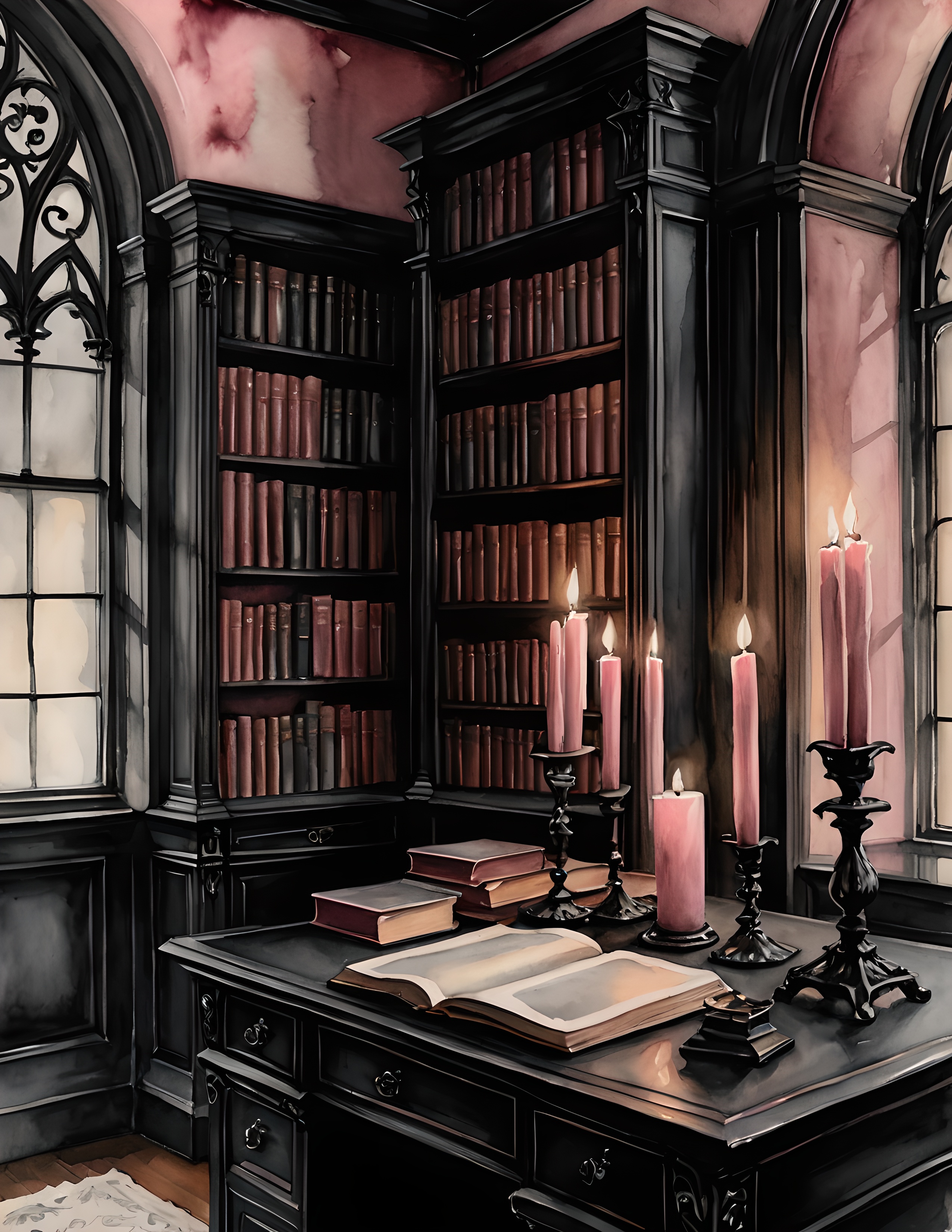
Hide the writing instead of skipping it
A page becomes more personal when it contains words, even if they are not immediately visible. Place journaling inside an envelope, beneath a hinged label, or on a narrow card tucked into a pocket. The act of opening it suits Halloween's sense of secrecy.
Write something specific: a childhood costume, the route of an evening walk, a dream, an overheard sentence, or the first cold night. Atmosphere becomes memorable when it is attached to a real detail.
Distress selectively
Ink one or two edges and leave the others clean. Tear one layer and cut the next with scissors. Crumple thin tissue but keep the writing card smooth. If every surface receives the same treatment, the page loses depth because nothing contrasts with anything else.
Test the page before adding the final object
Take a phone photograph in ordinary light. The small screen quickly reveals whether the focal point is clear. If the page reads as one dark rectangle, remove the least meaningful embellishment or add a narrow pale layer behind the main image.
Also check the page with the journal partly closed. Thick charms, stacked buttons, and several folded layers can strain the binding. Keep bulky objects near the outer edge, use flat paper details near the spine, and balance a very dimensional spread with a simpler page before or after it.
A reliable final formula is one dark anchor, one readable neutral, one muted seasonal colour, one tactile detail, and one hidden sentence. You can make the page elaborate, but keep those roles visible. The result will feel mysterious without losing the memory inside it.
Browse more paper techniques in the Sentimentalica journal archive.